
Taimi: LGBTQ+ Dating & Meet Up
Social Impact Inc.Social
4.126.73K Reviews
- Version
- 5.1.433
- Installs
- 10.00M
- Age Rating
- Mature 17+
Screenshots


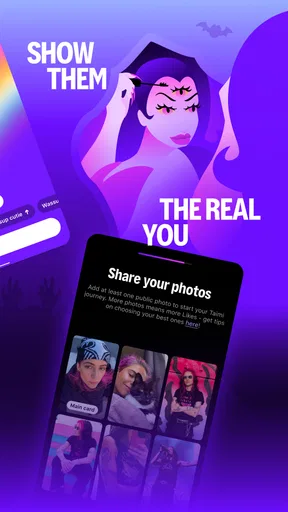

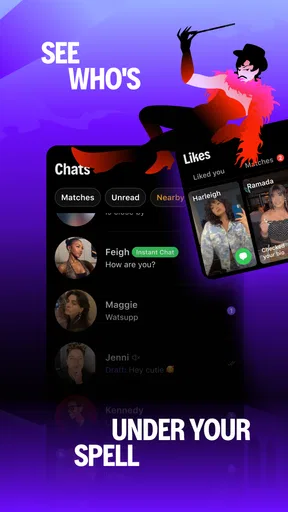

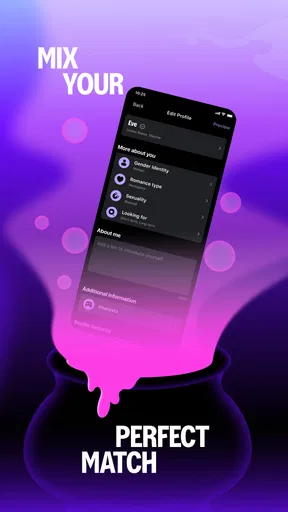
Our Review of Taimi: LGBTQ+ Dating & Meet Up
 Analysis by Appyee
I opened Taimi with a fairly ordinary goal: meet LGBTQ+ people nearby without having to explain my identity before a conversation had even started. That starting point matters, because this is not simply a general dating app with a few extra labels. It is a social app built for gay, lesbian, bi, queer, and trans people who want to chat, discover local singles, and decide for themselves whether a connection should stay online or move into real life.
My overall impression is positive, but not blindly enthusiastic. The app makes the first step feel more natural for people who are tired of filtering themselves through mainstream dating spaces. At the same time, the experience still depends heavily on the quality of the nearby user pool, the care you take with privacy, and your willingness to sort through conversations that go nowhere. I would recommend trying it, especially if you want an LGBTQ+-focused environment, but I would not treat it as a guaranteed shortcut to a relationship.
From opening the app to finding the right kind of connection
I find that the most useful way to judge Taimi is to look beyond how quickly I can browse and ask whether each step helps me reach a conversation that feels relevant. A focused profile and a clear idea of what I want can save more time than rushing through nearby options. From there, the key question is how well the app holds up when browsing, messaging, and deciding what to do next all happen in the same session.
Starting with a more relevant social space
One of the strongest reasons to begin with Taimi is that the app understands the context of LGBTQ+ dating from the first screen. I do not have to spend my initial effort guessing whether a match is comfortable with my identity, my pronouns, or the kind of relationship I am seeking. That does not remove every awkward conversation, but it changes the starting condition: the people browsing here have already chosen a space centered on LGBTQ+ connections.
The app is published by Social Impact Inc. and sits in the social category rather than presenting itself only as a narrow matchmaking tool. In practice, that distinction is useful. Some users arrive looking for a date, while others may be more interested in conversation, friendship, or meeting people locally. I found that this wider social purpose can make the first exchange less intense than an app where every interaction is immediately judged as a possible long-term romance.
That flexibility is also a trade-off. If I wanted a tightly controlled dating service where every profile clearly followed the same relationship goal, I might prefer a more traditional matchmaking alternative. Taimi is better suited to people who are willing to clarify intentions through conversation. The app creates the setting; I still have to ask the important questions.
Building a profile that does useful work
A profile on this kind of app should do more than announce an identity. I would use the limited attention a stranger gives me to explain what I actually want from the app: a date, new friends, casual conversation, or a slower connection. A short, specific line about interests or a preferred first meetup gives someone a much better opening than a collection of vague adjectives.
This is one of the less obvious ways to improve the experience. Instead of trying to appeal to everyone, I would make the profile selective. Mentioning the kind of conversation I enjoy, the pace I prefer, or the sort of local activity I would consider gives potential matches a practical reason to write. It also filters out people looking for something completely different before either person invests much time.
I would also avoid placing sensitive personal details in a public-facing profile. An LGBTQ+-focused app can feel safer and more comfortable than a general service, but that does not mean every stranger deserves immediate access to my workplace, home area, daily routine, or other identifying information. I prefer to reveal those details gradually, after a conversation has shown basic respect and consistency.
Searching nearby without treating distance as destiny
The local focus is central to the app’s appeal. A nearby profile can lead to a realistic coffee, walk, or casual drink in a way that a distant online connection usually cannot. When I browse, I would treat location as a starting filter rather than a promise that meeting will be easy. A person can live close by and still have a completely different schedule, comfort level, or expectation.
A useful workflow is to look for compatibility in three passes. First, I check whether the profile appears genuine and complete enough to begin a conversation. Next, I look for a shared interest or a detail that supports a specific question. Finally, I consider whether the person’s communication style seems respectful. This prevents me from judging profiles only by photographs, which is especially important when the app includes both social and dating-oriented users.
People in smaller towns may experience the local discovery side differently from those in large cities. A broad LGBTQ+ service can still be worthwhile in a smaller community because it gathers people who may be hard to find elsewhere, but the number of active, nearby conversations may feel limited. In that situation, I would use Taimi alongside local LGBTQ+ groups or events rather than expecting the app alone to provide a constant stream of suitable matches.
Turning a match into an actual conversation
The handoff from browsing to messaging is where many dating apps lose their momentum. Taimi gives me a relevant audience, but it cannot make every opening message thoughtful. I get better results when I refer to something concrete in the other person’s profile instead of sending a generic greeting. A simple question about a stated hobby or a place they enjoy is easier to answer and less intrusive than asking for personal information immediately.
I would keep the first exchange light, but not empty. The aim is to discover whether the conversation has a natural rhythm. If replies are consistently one-word answers, arrive only when the person wants something, or ignore clear boundaries, I do not keep trying to rescue the interaction. The app’s value is not measured by how many chats I can maintain; it is measured by how efficiently I can identify the few that feel mutual.
Another practical tip is to move from endless messaging to a small, low-pressure plan when the conversation is comfortable. I would suggest a public place, a short first meeting, and an easy way for both people to leave. That keeps the transition from online chat to offline contact manageable. If someone pushes for a private location, refuses a reasonable safety boundary, or becomes hostile when I slow the pace, that is useful information, not a challenge I need to overcome.
Managing the handoffs between social and dating goals
The app’s broad identity means I should not assume that every appealing profile is seeking the same outcome. A person may want a relationship, while another is mainly looking for community or conversation. I would make that distinction early and politely. “What brought you here?” is often more useful than making assumptions based on photos or a short bio.
This is where Taimi can feel more human than a highly transactional swipe-only alternative. A conversation does not have to become a date immediately. The downside is that the path to a clear result can take longer, because I may need to negotiate expectations instead of relying on a narrow matching format. For someone who dislikes ambiguity, that extra conversation may feel like friction. For someone who wants connections that develop naturally, it can be a strength.
I also see value in treating the app as a place to widen my social circle, not just as a queue of potential partners. If I moved to a new city or wanted to reconnect with LGBTQ+ community life, a social-first approach would make more sense than judging every interaction by romantic potential. That is a specific use case where Taimi may be more comfortable than a conventional dating app that frames every profile as a romantic prospect.
A realistic everyday workflow
Imagine I have finished work on a Thursday and want to meet someone new, but I do not want to commit to a full evening with a stranger. I can open the app, review nearby profiles, and start with one or two people whose interests and communication style seem compatible. Rather than spending the whole night messaging, I can explain that I am free for a short public coffee over the weekend. If the conversation becomes awkward, I have lost little time; if it goes well, we have a clear next step.
The important part of this workflow is the handoff. Browsing leads to a message, the message leads to a brief exchange, and that exchange leads either to a small plan or a respectful decision to stop. I would not move directly from a profile to sharing my exact routine or meeting somewhere private. The app helps me find the contact, but the quality and safety of the transition remain my responsibility.
What happens when a conversation becomes a meeting
When an online connection feels promising, I prefer a first meeting with a defined end time. A café, a public park during the day, or another familiar public setting gives both people room to assess the chemistry without creating unnecessary pressure. I would tell a trusted friend where I am going and arrange my own way home. Those steps are useful whether the conversation started on Taimi or anywhere else.
The app is most successful here when it supports a gradual move from discovery to trust. I do not need to share everything before meeting, and I do not need to treat a first meeting as a relationship decision. The result I want from the first encounter is simpler: confirm that the person is genuine, respectful, and enjoyable to be around. A second meeting can answer deeper questions later.
There is also a useful alternative outcome. Sometimes the right result is realizing that the connection is not suitable. A clear, courteous ending is better than continuing a conversation out of guilt. If a user repeatedly ignores boundaries, asks for money, pressures me to leave the app immediately, or gives contradictory personal details, I would end contact and use the app’s available safety controls rather than trying to investigate the person myself.
Where the flow breaks down
No dating platform can solve the unevenness of human behavior. Taimi may help me reach a more relevant audience, but I can still encounter slow replies, abandoned chats, mismatched intentions, or profiles that provide too little information to judge. The social focus may increase the number of possible ways to connect, yet it can also make the next step less obvious.
Another limitation is the emotional cost of constant browsing. Even in a community-focused space, repeated profile decisions can encourage me to judge people quickly or measure my own appeal through responses. I get a healthier experience when I set a short browsing window, start only a few conversations, and take breaks instead of treating the app as a daily obligation.
The free entry point is helpful, but the presence of in-app purchases means I would pay attention before buying anything. Individual purchases range from under a dollar to well over a hundred dollars, so I would not assume that spending more will fix a weak local user pool or create genuine compatibility. I would first use the free experience long enough to decide whether the people and conversations available to me justify any optional expense.
Privacy is another place where the flow can fail. The app is rated for mature users aged seventeen and over, but an age label does not replace judgment. I would be particularly careful with intimate images, financial requests, verification demands from strangers, and anyone who tries to isolate the conversation from normal boundaries. A profile can feel familiar very quickly; trust should still be earned through consistent behavior.
How it compares with familiar alternatives
Compared with a mainstream dating app, Taimi’s clearest advantage is relevance. I am less likely to spend the opening conversation explaining why LGBTQ+ identity is important to me or wondering whether a match is genuinely open to dating someone like me. That can make discovery feel less exhausting and can give queer and trans users a more comfortable place to begin.
Compared with a narrowly romantic service, its broader social character is both its appeal and its complication. I can approach it for friendship or community as well as dating, but I need to communicate my intentions clearly. Compared with local LGBTQ+ events, it offers a more private and convenient first step, although an in-person group may create stronger context and accountability once I am ready to participate offline.
I would choose a different option if my priority were highly structured compatibility questions, professional matchmaking, or a very small set of carefully screened introductions. I would also look beyond an app if my local area had too few active users. Taimi is strongest when I want an LGBTQ+-centered starting point and am prepared to do some of the social work myself.
Everyday usability and what the numbers suggest
The app has been available since June 2018, and its current version is 5.1.422 with support beginning at Android 7.0. Those details make it accessible to many Android users who are not running the newest phone software. I would still keep the app updated when possible, particularly for a service involving messaging and personal information.
Its reach is substantial: Taimi has passed ten million installs, with an average rating of 4.1 from around 194 thousand ratings. That scale suggests I am not entering an empty experiment, although it does not guarantee that my own neighborhood will be active. I read broad popularity as a reason to test the app, not as proof that every search will produce a good match.
The app is free to download, which lowers the risk of trying it. Optional purchases cost from $0.99 to $174.99 per item, so I would make any spending decision only after seeing how well the basic experience works for my location and goals. The developer is Social Impact Inc., and the mature age classification is a reminder that the app is intended for adult-oriented social and dating use rather than a general youth community.
Who should try it and who should skip it
I think Taimi is a strong candidate for LGBTQ+ users who want a focused place to meet people nearby, especially those who feel overlooked or uncomfortable on general-purpose dating platforms. It also suits someone who is open to more than one kind of connection and is willing to state their intentions instead of expecting the app to infer them.
I would be more cautious about recommending it to someone who wants immediate certainty, a completely curated pool, or a dating experience with no ambiguity. It may also disappoint users in areas where few nearby profiles are active. People who are easily drained by messaging should set firm limits, because the wider social purpose can create more conversations to manage without necessarily producing more meaningful outcomes.
My final assessment after following the full journey
For me, the best way to use Taimi is as a guided starting point rather than an automatic matchmaking machine. I create a selective profile, browse with a clear purpose, begin a few specific conversations, confirm intentions early, and move toward a short public meeting only when the interaction feels mutual. That workflow turns the app from passive scrolling into a practical way to make real social decisions.
The strongest result is not simply finding a date. It is finding a setting where an LGBTQ+ identity is part of the normal context, then using that comfort to build a connection at a sensible pace. The main weaknesses—uncertain local activity, mixed intentions, uneven conversations, and optional spending—are real, but they are manageable when I treat the app as one tool rather than my entire social life.
My recommendation is to try Taimi for its focused LGBTQ+ audience and flexible social purpose, while keeping expectations realistic. I would give it time to show whether my area has the right people, avoid paying before understanding the free experience, and judge success by the quality of conversations rather than the number of profiles viewed. For the right user, that balance makes it a worthwhile alternative to ordinary dating apps.
Privacy and Permissions
See what permissions an app requests and how it handles your data.
- Location
- approximate location (network-based)
- Photos/Media/Files
- read the contents of your USB storage, modify or delete the contents of your USB storage
- Storage
- read the contents of your USB storage, modify or delete the contents of your USB storage
- Camera
- take pictures and videos
- Microphone
- record audio
- Wi-Fi connection information
- view Wi-Fi connections
- Other
- view network connections, full network access, change your audio settings, run at startup, draw over other apps, control vibration, prevent device from sleeping, Google Play license check
Verdict
Strengths of Taimi: LGBTQ+ Dating & Meet Up
- Inclusive dating app for LGBTQ+ people and allies.
- Offers video calls and live streams for more personal connections.
- Detailed profiles help users share identity and dating preferences.
- Useful discovery tools for finding nearby and compatible members.
- Includes safety features such as profile verification options.
Limitations of Taimi: LGBTQ+ Dating & Meet Up
- Many advanced features require a paid subscription.
- Some areas may have a smaller local user base.
- Live content can feel distracting from traditional dating.
- Profile visibility may depend heavily on premium features.
- As with any dating app, fake or inactive profiles can appear.
Similar Picks in This Category
View All
Meta Platforms, Inc.4.6

Instagram4.0

Likee-Live, Chat & Party Games
Likeme Pte. Ltd.4.4

Facebook Lite
Meta Platforms, Inc.4.5

TikTok - Videos, Shop & LIVE
TikTok Pte. Ltd.4.0

Moj: Free Short Drama & Reels
ShareChat4.1
Frequently Asked Questions
What is Taimi: LGBTQ+ Dating & Meet Up?
Taimi is a dating and social networking app designed for LGBTQ+ people and allies. It combines profile-based matching, messaging, discovery, and community features in one platform. During testing, the app felt more like a general LGBTQ+ social space than a strictly traditional dating service, making it suitable for users seeking romance, friendship, conversations, or new connections within the community.
Who can use Taimi, and is it suitable for all LGBTQ+ identities?
Taimi is intended for adults across the LGBTQ+ spectrum, including people who identify as lesbian, gay, bisexual, transgender, queer, nonbinary, and other identities, as well as allies. Profile settings allow users to communicate aspects of their identity and preferences, although the available options and experience may vary by region or app version. Users should review the age requirements before creating an account.
Is Taimi free to download and use?
Taimi can generally be downloaded for free on supported Android and iOS devices, with core features available without an initial payment. However, the app may offer optional premium subscriptions or paid features that unlock additional visibility, filters, browsing controls, or other conveniences. Pricing, trial terms, and available features can change, so check the current in-app purchase details before subscribing.
How does matching and messaging work on Taimi?
After creating a profile, users can browse or discover other members according to location, preferences, and available filters. Depending on the interaction and account settings, you may be able to like profiles, match, follow, or start conversations. As with any dating app, the quality of results depends heavily on your location, profile completeness, activity level, and the number of nearby users.
Is Taimi safe and private to use?
Taimi provides account, privacy, and safety tools intended to help users control their experience, including blocking and reporting options. Nevertheless, no dating platform can eliminate every risk. Avoid sharing sensitive personal information too quickly, verify a person’s identity through conversation, and use caution before meeting offline. Review the app’s privacy policy and permission requests, and report suspicious, abusive, or fraudulent behavior promptly.
